How God's Prophetic Plan Prevailed through the Holocaust


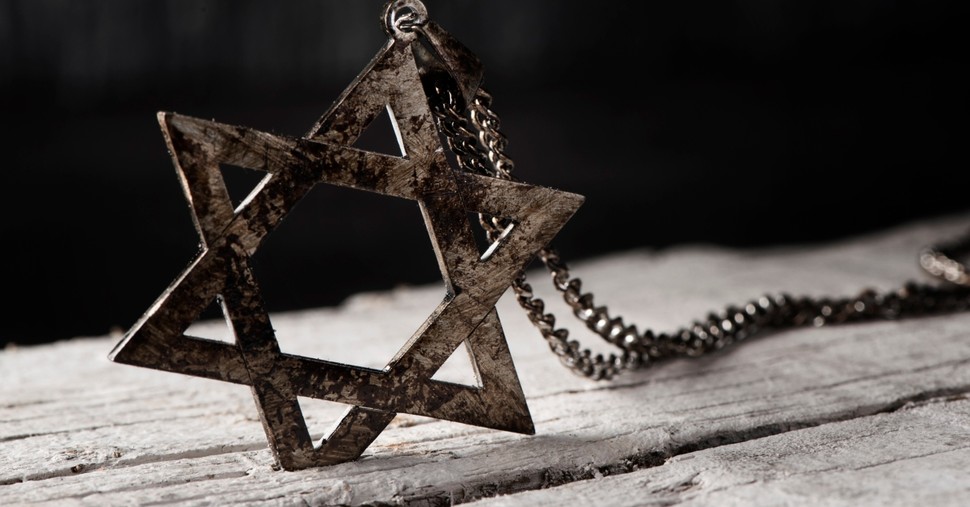
Holocaust Remembrance Day is being observed this week in Israel and around the world. It is a deeply painful time for the Jewish people as they remember not just a historical tragedy, but a break in their communal life, culture, and tradition—and the near extermination of their people. In Israel, a two-minute siren sounds, and people across the country stop whatever they are doing: drivers pause on highways, people stop walking, and everyone stands in silent reflection. Around the world, Jewish people observe moments of silence and hold local memorials and candle lighting services to honor the six million Jews who were murdered. The day is somber, and it often causes many to wonder where God was in the Holocaust.
The Return of the Jewish People to Israel
The Holocaust cannot be addressed in a short article, nor is it typically a subject associated with inspiration or peace. Yet one perspective offers a measure of encouragement. This horrific, systematic attempt to annihilate an entire people did not happen in isolation. It occurred within a broader historical context, coinciding with events spanning hundreds of years that attest to God’s constant control and to His setting the stage for the return of His people to the land of Israel.
Consider that waves of Jewish people began immigrating to the land of Israel in the late 1800s, driven by a combination of social, political, and religious factors. Violent attacks on Jewish communities in Russia and Eastern Europe, known as pogroms, left many Jewish families homeless and in danger. European antisemitism also contributed, leaving Jews so discriminated against that it impacted their employment, education, and overall daily lives—many lived in poverty. On top of that, nationalist movements in Europe often scapegoated Jews, and by the 1930s, had created a hostile environment where they faced continual persecution. But persecution was not the only motive for immigrating to Israel before World War II. Many Jews responded to a religious and spiritual longing to return to the land promised to them by God through Abraham centuries earlier.
The Rise of Zionism
Coinciding with this increase in Jewish immigration was the rise of the Zionist movement under the leadership of Theodor Herzl. This Austro-Hungarian journalist, playwright, and political activist is considered the father of modern political Zionism—the belief that Jews need their own sovereign state where they can live safely and govern themselves. The Dreyfus case, a political and judicial scandal in late nineteenth-century France, exposed modern antisemitism and convinced Herzl that a Jewish homeland was necessary for their security and self-determination. In 1897, he lobbied European leaders and organized the First Zionist Congress in Basel, Switzerland. At that gathering, he made a striking statement that within 50 years, a Jewish state would be established.
This Congress laid the groundwork for the Zionist movement, which would eventually lead to the creation of the State of Israel some 50 years later—bringing justice to the Jewish people after 2,000 years of persecution and antisemitism. However, before that would happen, the rise of the Nazi regime in Germany would lead to World War II and the murder of six million Jews, along with tens of millions of others who perished in the devastation. It was a time of profound evil, as destructive forces sought not only to annihilate the Jewish people but to reshape the world through violence and hatred.
Hope amid Tragedy
From a faith perspective, one could view the Holocaust as an evil attempt to prevent the return of the Jews to their homeland that had already begun and was a fulfillment of God’s promises directed toward His people. Yet even in the face of unimaginable tragedy, that outcome was not stopped. Just three years after the war ended, on May 14, 1948, the State of Israel was established. To be clear, the Holocaust was not necessary or intended for this outcome—rather, God’s purposes were not thwarted in the face of such evil.
The ancient prophet Ezekiel once described a vision of a valley of dry bones. The bones were lifeless and scattered—symbolizing a people who appeared to have no hope. Yet in that same vision, the Lord God tells Ezekiel to prophesy to the bones and say to them:
O dry bones, hear the word of the Lord! Thus says the Lord God to these bones: “Surely I will cause breath to enter into you, and you shall live. I will put sinews on you and bring flesh upon you, cover you with skin and put breath in you; and you shall live. Then you shall know that I am the Lord.” (Ezekiel 37:4–6)
As Ezekiel speaks God’s words, those dry bones indeed came to life again. They are covered with flesh and skin, receive the breath of life, and stand as “an exceedingly great army” (v. 10; see also vv. 7–9). It’s a vision that symbolizes the literal, physical restoration of Israel—the Jewish people once in exile, powerless and seemingly dead, now “back to life” and living sovereign in their own land. After the State of Israel was born, Jewish Aliyah to the land continued, as Jews from around the world made their way to their promised land. In more recent times, after October 7, 2023, and the resulting increase in antisemitism, we have witnessed yet another surge in global Aliyah.
During the Holocaust, the Jewish people had no way to defend themselves. Today, the Israel Defense Forces (IDF) is widely regarded as one of the most capable and technologically advanced militaries in the world.
What Man Intended for Evil, God Has Used for Good
The suffering and loss from the Holocaust are beyond comprehension, and the pain it caused should never be minimized. Clearly, such evil was not the work of God, but of humanity at its worst. Yet history shows evil did not prevail. In 1947, when the 50 years Herzl spoke of had nearly passed, the United Nations voted to allow the creation of a Jewish State. Soon after, Israel was born.
Holocaust Remembrance Day is primarily a day of remembrance for the Jewish people because it honors those Jews who lost their lives and reflects on centuries of Jewish suffering. Yet it offers encouragement, meaning, and hope for the Christian, too. For leading up to, amid, and after the Holocaust, God never stopped furthering His plan of redemption, causing events to happen to prepare for the Jewish return to their homeland that are beyond human explanation.
Though we mourn alongside our Jewish friends as we remember this horrific time in history, we stand firm knowing that even in the darkest moments, restoration is possible—and that ultimately, evil does not have the last word.
Related Podcast:
Article photo credit: ©GettyImages/nito100

Originally published April 13, 2026.