Space Exploration ‘Glorifies God,’ Says Longtime NASA Astronaut Butch Wilmore


Listen or Read Below:

Audio By Carbonatix
A retired NASA astronaut who has flown to space three times – and whose unexpected 286-day mission made worldwide headlines – says manned space exploration flows from humanity’s desire to discover and is a pursuit that ultimately points back to God.
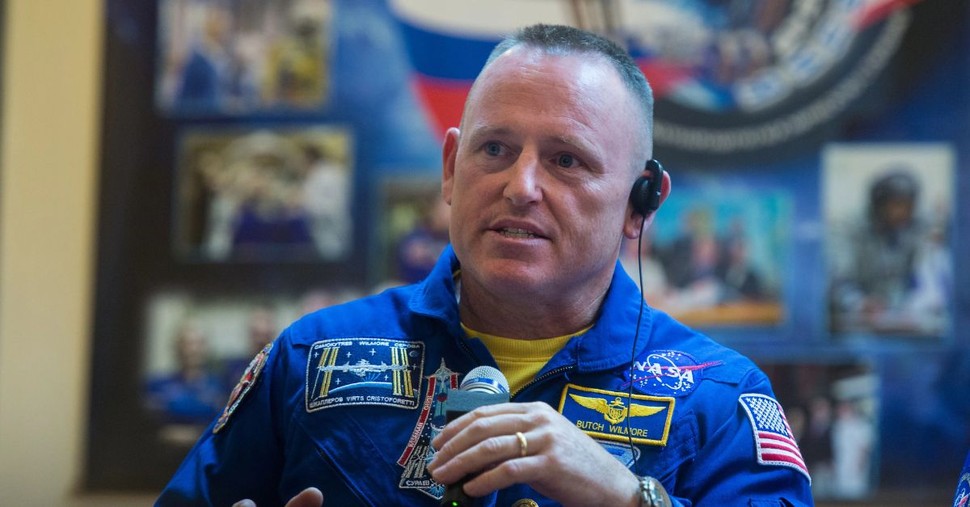
Barry “Butch” Wilmore is a veteran NASA astronaut and former U.S. Navy test pilot who first flew aboard Space Shuttle Atlantis in 2009 to the International Space Station, and later returned to the station in 2014 as part of Soyuz TMA-14M.
But Wilmore is best known for his time in 2024 commanding the Boeing Starliner on its first crewed test flight, a mission originally expected to last about a week but that was dramatically extended to 286 days due to technical issues that delayed the crew’s return.
He and crewmate Sunita Williams lived aboard the Space Station with the station’s rotating international crew before returning in March 2025.
Wilmore’s new book, Stuck in Space: An Astronaut's Hope Through the Unexpected, reveals the challenges of that mission and the faith that sustained him.
Few on Earth have experienced what Wilmore experienced – an eight-day trip that stretched into nine months. Wilmore, though, said he leaned on Scripture during that time.
“God's Word is absolutely true. I believe it. I had learned that in whatever situation I am in, to be content. Paul said the same,” Wilmore told Crosswalk Headlines.
“It's not to say that there aren't trials – but through it all, honestly, I was content, and it solidified a lot of what I had been learning through Scripture for decades, and living it in the moment is what we're called to do, and that's what I tried to do through the whole process.”
Wilmore said the experience strengthened his faith. He’s circled the planet 7,424 times, he said, and has spent more than a year of his life in space.
“I did not need to go to space to learn anything about my Lord and Savior, Jesus Christ, and the plan of salvation. … I didn't need that, because God's Word is sufficient. [But] does it strengthen you? Absolutely, it does. You look at the beauty of this planet – that Isaiah 45:18 is very clear that God created it to be inhabited.
“You see the brilliant colors, the atmosphere, the variety, the lightning, and how He's nourishing our planet with rainfall. And you see that from above, you see shooting stars from above looking down at Earth, you see them below you.”
He also experienced the aurora (Northern Lights) from above, which he said reveals God’s protecting power as Earth’s magnetic field deflects harmful radiation.
“The Lord magnetized our planet, and that's just visible evidence of the protection,” he said.
“Does it give me an even greater perspective of my almighty God? Absolutely, it does.”
Wilmore was part of a space exploration industry that inspires wonder and awe – and is the stuff of classroom discussions, museums, and movies – but that also sparks debate over funding and budget priorities. It’s common to see comments on social media from skeptics asking: What’s the point?
Wilmore’s response to that question depends on the audience. For Christians, he said, the answer is rooted in faith.
“Discovery glorifies God. It has throughout history. We see it even in Scripture,” Wilmore said, referencing the story of Tubal-Cain from Genesis 4:22, who forged tools from bronze and iron.
“That is an understanding that didn't exist before, and that glorifies God as we continue to open up – as He continues to open up – our understanding. Going into the heavens glorifies God – these capabilities glorify God. A rocket launching off a pad – the technology, the understanding of that, glorifies God, because He's enabled us to do that. So as we go further, and we go to the moon, we do those things – it all glorifies Him.”
For the broader audience, though, Wilmore answers a different way, saying manned space exploration sparks inventions used back home – and supports thousands of jobs.
“It is a complete industry, and it is supporting [the economy] all the way up and down the labor chain – from the individuals that are going into the coal mines and getting the coal that produces the power to power the buildings that the welders work in to weld the huge rockets together, to the scientists and those in technology that are building – it's an industry throughout our nation, and it supports our nation's economy. So those billions of dollars are not spent on that handful of [moon] regolith – it is supporting an entire industry in our nation that fuels our economy. … It supports livelihood, it supports families.”
Related Article
How to Trust God When Life Is Stuck on Pause
Photo Credit: ©NASA
Michael Foust has covered the intersection of faith and news for 20 years. His stories have appeared in Baptist Press, Christianity Today, The Christian Post, the Leaf-Chronicle, the Toronto Star and the Knoxville News-Sentinel.
Listen to Michael's Podcast! He is the host of Crosswalk Talk, a podcast where he talks with Christian movie stars, musicians, directors, and more. Hear how famous Christian figures keep their faith a priority in Hollywood and discover the best Christian movies, books, television, and other entertainment. You can find Crosswalk Talk on LifeAudio.com, or subscribe on Apple or Spotify so you never miss an interview that will be sure to encourage your faith.
Originally published April 16, 2026.