What Winston Churchill Can Teach Us about Defending Freedom


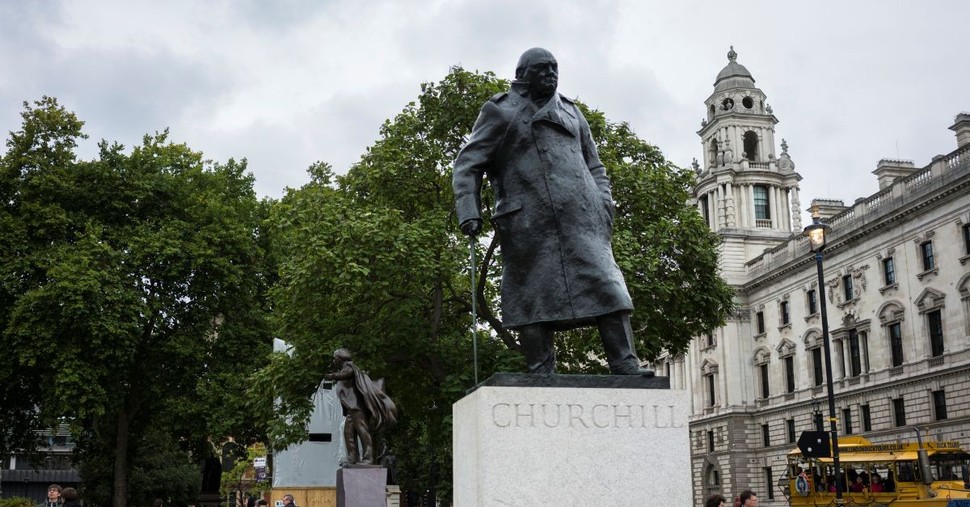
When free civilizations have their principles of freedom threatened, their leaders and citizens must defend the freedom they enjoy to keep it. It’s not enough to just hope that the dangers that threaten freedom will go away. Free people need to fight for their freedom to continue, and to do so, they need courage. Historically, Winston Churchill became one of the clearest examples of what can happen when a leader chooses to courageously defend freedom. Churchill’s bold decisions to fight for freedom during the darkest days of World War II can teach us valuable lessons that we can use to defend our own free society in the United States today.
What Happened?
When World War II began in 1939, Nazi Germany had become an aggressive dictatorship. After Germany invaded Poland, Great Britain and France declared war. By May 1940, German forces had quickly overrun Denmark, Norway, Belgium, the Netherlands, and France, leaving Britain standing largely alone facing the immediate threat of total tyranny across continental Europe.
That same critical month, Winston Churchill succeeded Neville Chamberlain as Britain’s prime minister. Churchill inherited an especially dangerous situation. The British Expeditionary Force had suffered disastrous defeats, and Germany had vast strategic advantages. Government leaders in London openly discussed surrendering to the Nazis. But Churchill refused to give up. In a series of powerful speeches, he spoke with honesty about the dangers Britain faced while insisting that surrender was unthinkable. Addressing the House of Commons, he famously declared: “We shall fight on the beaches … we shall fight in the fields and in the streets, we shall fight in the hills; we shall never surrender.”
Churchill understood that Britain was fighting not just for territory, but to preserve their civilization’s freedom. In another landmark 1940 address, he contrasted the British heritage – a people “nurtured in freedom and individual responsibility” – with the brutal “totalitarian uniformity” imposed by National Socialism. In 1940, when defeat seemed close, Britain’s citizens made the decisive choice to defend their free society against the Nazis’ tyranny.
Why Did It Matter?
Churchill’s leadership highlights how we can’t preserve freedom simply through wishful thinking. We have to be willing to take courageous actions to confront aggressive forces seeking to destroy the freedom we enjoy. It’s important to work for peace through diplomacy and try to avoid war unnecessarily. But we also have to be willing to fight for our freedom if it’s being threatened by force.
We also need to defend the cause of freedom around the world. Addressing a joint session of the United States Congress in December 1941, shortly after the attack on Pearl Harbor brought America into the conflict, Churchill emphasized that the Allied effort was “not only defending our hearths and homes, but the cause of freedom in every land.”
Churchill pointed out the importance of unified security and strength against tyranny. Addressing parliament, he said: “Civilization will not last, freedom will not survive, peace will not be kept, unless a very large majority of mankind unite together to defend them and show themselves possessed of a constabulary power before which barbaric and atavistic forces will stand in awe.” Churchill’s leadership highlighted how freedom was not just a privilege reserved for one nation, but a fundamental right belonging to all people around the world. Churchill also understood that protecting this right often involved having to make hard sacrifices. He warned the American people that the war would be long and challenging, but reassured them that “as long as we have faith in our cause, and an unconquerable willpower,” the challenge remained well within their power.
If citizens are unwilling to protect vital freedoms (like free elections, freedom of speech, the rule of law, and human dignity) those freedoms become vulnerable. Churchill showed that it’s important to act to protect a free society even when we’re afraid. We can trust God to help us overcome fear, so we can go ahead and move forward with what we need to do to defend freedom even when we’re afraid.
Why Does It Still Matter Today?
Today, free nations face the same underlying question Churchill faced: What will a free society do when its foundational values are challenged?
In America today, people are often divided along political lines, and rudeness is rampant in our society’s conversations. In polarizing times like these, it can be tempting to view political opponents as enemies rather than as fellow citizens. Churchill’s legacy reminds us of the civic discipline required to maintain a free republic. Defending a free society means upholding the fundamental constitutional rights of those with whom we disagree just as fiercely as those with whom we agree. Democracy depends on citizens who can debate passionately while respecting the democratic process, upholding the rule of law even when outcomes are inconvenient, rejecting political violence, and resisting the urge to silence dissenting voices.
This commitment to self-governance was a central part of Churchill’s vision. In his 1941 speech to Congress, he spoke of “defending all that to free men is dear.” He was describing a shared dedication to a society where free people determine their own destiny.
Every citizen in a free nation can courageously defend freedom. We show courage when we tell the truth when falsehood is convenient, defend marginalized people, serve in our local communities, and listen well to opposing viewpoints while standing strong on our values and looking for common ground with others.
We should never take our freedom for granted. Every civilization can remain free only if each generation resolves that freedom is worth defending to preserve it. Sometimes that defense involves military action and physical strength. At other times, it involves moral leadership, civic responsibility, and the courage to speak out against evil. The lesson of Churchill’s leadership is that we must understand our values before a crisis arrives, so that when challenges emerge, we can stand united in defense of freedom.
The challenge of defending freedom is important work that belongs to all of us!
This article is part of Salem Media's Foundations of Freedom series.
Photo Credit: ©GettyImages / Vesnaandjic

Originally published October 14, 2026.